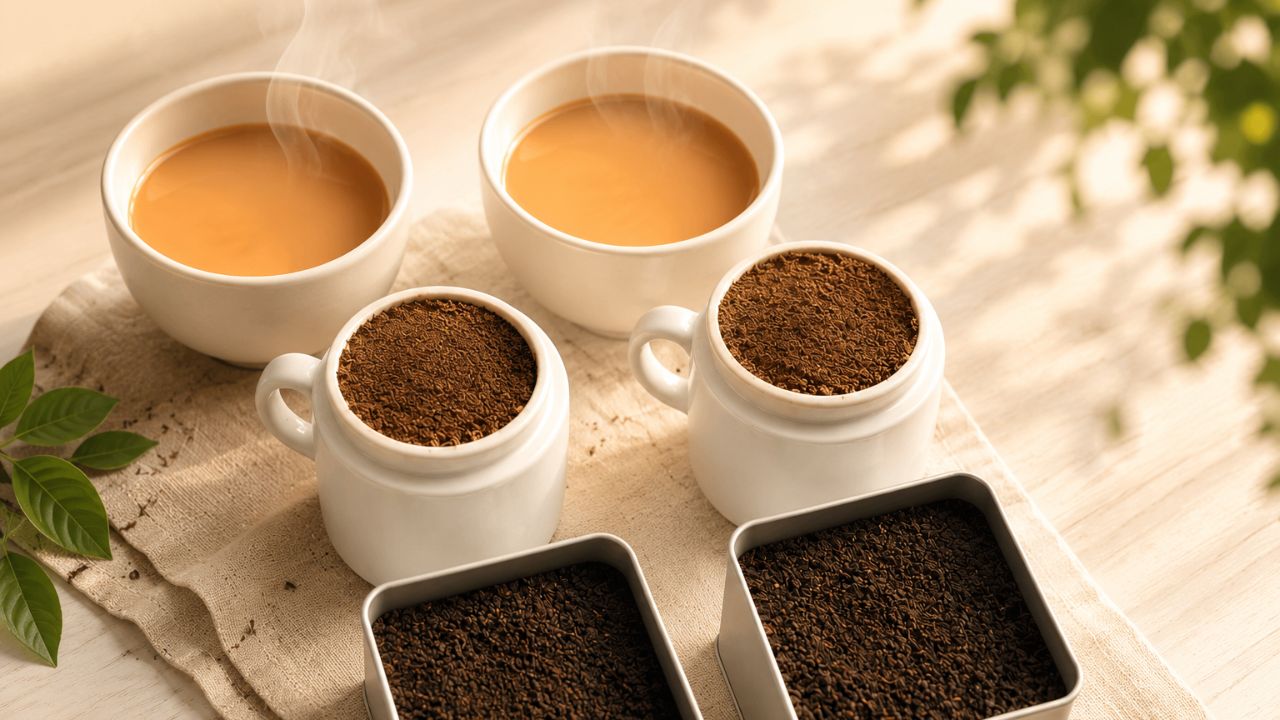
Most of the tea sitting on supermarket shelves is a blend — a mix of leaves from dozens of gardens, sometimes from several countries, brought together so every box tastes roughly the same. Single estate tea takes the opposite approach. It comes from one garden, and one garden only.
You’ve probably seen the same idea elsewhere: single malt whisky, single origin coffee, single vineyard wine. Tea has its own version of it, and once you understand what single estate tea means, it’s hard to go back to the anonymous stuff in the value pack.
In short: Single estate tea is tea grown, harvested and processed within one specific estate or garden, rather than blended from many. Because it comes from a single source, it carries a distinctive flavour shaped by that one place — and you can trace exactly where your cup came from.
What is single estate tea, exactly ?
Single estate tea is tea that comes entirely from one estate — a single named garden in a single location. Everything in your packet was grown on the same soil, under the same sky, picked by the same hands and processed in the same place.
That might sound like an obvious thing for tea to be, but it isn’t the norm. The vast majority of commercial tea is blended. A typical “English Breakfast” or supermarket house brand can contain leaves from twenty or more different gardens, chosen and mixed by a tea taster to hit a consistent, repeatable flavour at the lowest possible cost. It’s clever work — but it means you have no real idea where your tea actually grew.
Single estate tea is the honest opposite. One garden, one origin, nothing hidden in the mix.
Single estate tea vs blended tea
The clearest way to understand single estate tea is to put it next to the blended tea most of us grew up drinking.
| Single Estate Tea | Blended Tea | |
| Source | One garden, one location | Many gardens, often many regions |
| Flavour | Distinctive, shaped by that one place | Standardised to taste the same every time |
| Traceability | Fully traceable to the estate | Hard or impossible to trace |
| Character | Varies naturally with the season | Consistent year-round by design |
| Made for | Flavour and authenticity | Consistency and low cost |
Neither is “wrong” — blends exist for good reasons. But if you care about taste, freshness and knowing what’s in your cup, single estate wins on every count that matters.
Why single estate tea matters
So why should any of this change what you buy? A few reasons, and they’re all things you can taste or trust.
1. A purer, more distinctive flavour
Tea, like wine, has terroir — the idea that the soil, altitude, rainfall and climate of a place leave their fingerprint on the final flavour. A single estate Assam tea tastes of Assam: malty, brisk and full-bodied, the way that valley makes it. Because it isn’t blended down to a safe average, its true character actually comes through. You’re tasting a place, not a recipe.
2. Full traceability and transparency
With single estate tea, you know exactly where your tea came from — the garden, the region, often the very season it was picked. In an age where people genuinely want to know the story behind what they eat and drink, that kind of transparency is rare and valuable. Nothing is averaged out or hidden behind a generic label.
3. Better freshness and quality
Blending can be a convenient way to use up large volumes of leaf, including lower grades quietly mixed in. A single estate garden has nowhere to hide poor quality — the tea is the tea. That accountability tends to mean fresher leaf and more careful processing, because the estate’s name is on every cup.
4. It supports one garden and its people
When you buy single estate tea, your money goes to a specific garden and the community that works it, rather than disappearing into a faceless supply chain. For small, family-run estates especially, that direct support helps keep traditional, careful tea-making alive. Certifications like Trustea add another layer of assurance that the tea is ethically sourced and quality-checked.
5. You get the character of the season
Single estate tea changes a little through the year, and that’s a feature, not a flaw. Different harvests — or “flushes” — bring their own subtle notes, the same way a vineyard’s vintage shifts from year to year. It makes every cup feel a little more alive and a little more real.
Single estate vs single origin: a quick note
The two terms get used loosely, so it’s worth a quick clarification. “Single origin” usually means the tea comes from one region or country. “Single estate” is more specific still — it narrows that all the way down to one particular garden. Every single estate tea is single origin, but not every single origin tea is single estate. When you see “single estate,” you’re getting the tightest, most traceable promise of the two.
How to spot genuine single estate tea
A few simple things separate the real thing from clever marketing:
- A named garden or estate — the packaging should tell you where the tea is from, not just the country.
- Clear origin details — region, and often the type or flush of tea.
- Honest, unblended description — it should say single estate or single garden, not “blend of the finest teas.”
- Trusted certification — marks like Trustea signal that quality and sourcing have been checked.
At Tea Matters, every tea is exactly this — single estate, hand-picked and Trustea certified, grown in one family garden in Assam with a hundred-year legacy behind it. If you’d like to taste what one honest garden can do, explore our single estate Assam teas here.
Summary
Single estate tea is tea from one garden, not many — grown, picked and processed in a single place, and traceable right back to it. Unlike blended tea, which is mixed from dozens of sources to taste the same every time, single estate tea keeps the distinctive flavour of its origin, offers full traceability, tends to be fresher and better quality, supports one garden and its people, and carries the natural character of each season. It’s the difference between drinking a recipe and drinking a real place. Look for a named estate, honest origin details and trusted certification — and if you want that in your own cup, a single estate Assam tea from Tea Matters is a genuine, traceable place to begin.
Frequently asked questions