
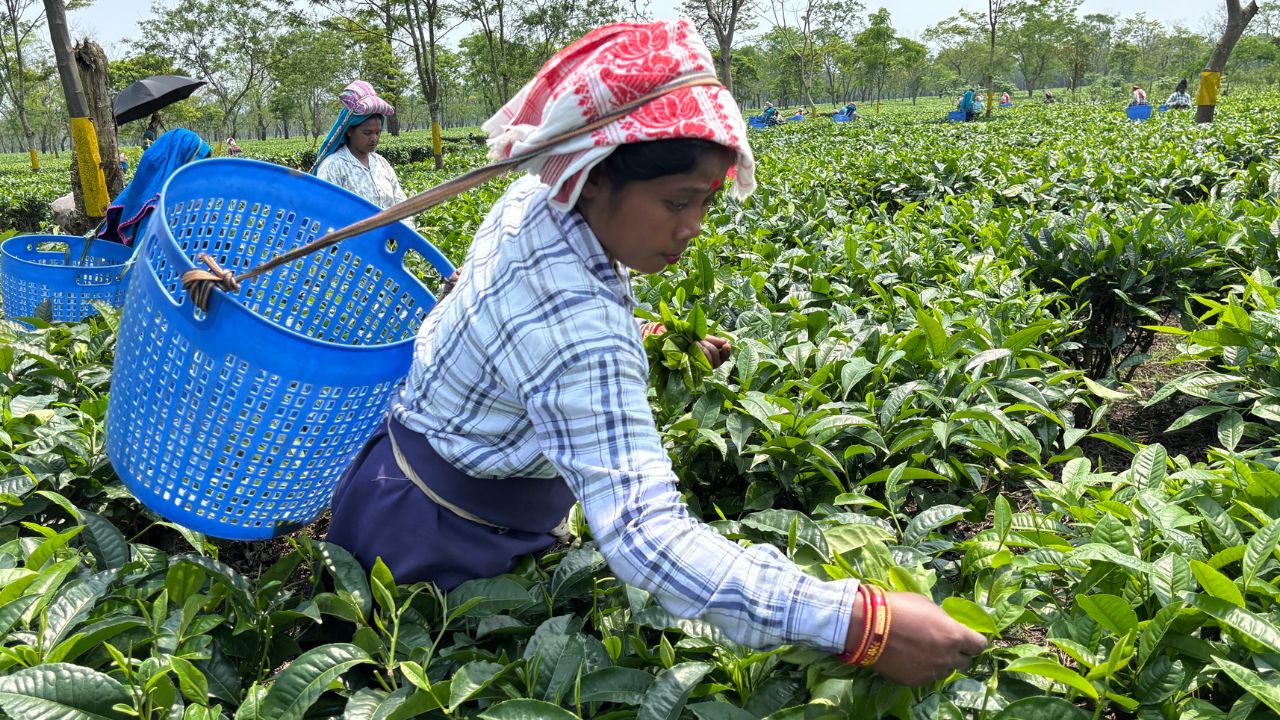
Two of the most famous teas in the world come from the same country, and people still mix them up at the shop. Assam Tea and Darjeeling Tea are both Indian, both usually sold as black tea, and both end up in millions of cups every morning. But put them side by side and they could hardly be more different.
One is bold and malty enough to carry milk, sugar and a fistful of spices. The other is light, floral and best enjoyed on its own, slowly, while it’s still hot. If you’ve ever stood in the tea aisle wondering which one belongs in your kitchen, this guide settles the Assam tea vs Darjeeling tea question for good.
Short answer: Choose Assam tea if you want a strong, brisk, full-bodied cup for your morning chai with milk. Choose Darjeeling tea if you prefer a delicate, aromatic cup you can sip without milk. Assam is the everyday workhorse; Darjeeling is the slow weekend pleasure.
Assam vs Darjeeling tea at a glance
| Feature | Assam Tea | Darjeeling Tea |
| Where it grows | Brahmaputra Valley, Assam — low altitude, hot & humid | Himalayan foothills, West Bengal — high altitude, cool & misty |
| Tea plant | Camellia sinensis var. assamica (large leaf) | Mostly Camellia sinensis var. sinensis (small leaf) |
| Flavour | Malty, brisk, bold, full-bodied | Light, floral, fruity, muscatel |
| Liquor colour | Deep coppery red-amber | Pale gold to light amber |
| Best with milk? | Yes — made for it | No — drink it plain |
| Caffeine feel | Higher, stronger kick | Gentler, more delicate |
| Best for | Masala chai, breakfast tea, daily cup | Afternoon sipping, special occasions |
It starts with where they grow
The biggest difference between the two teas is geography, and everything else follows from it. Assam tea grows in the Brahmaputra Valley in the northeast of India — flat, low-lying gardens close to sea level, in a hot and humid climate that the tea bush thrives in. Darjeeling tea grows far higher up, on the steep slopes of the Himalayan foothills in West Bengal, at altitudes that climb from around 600 to over 2,000 metres.
That gap in altitude changes everything. Heat, heavy rain and rich valley soil push the Assam bush to grow fast and strong. Cool mountain air, mist and slow growth give Darjeeling its lightness and aroma. The same leaf, grown in two different worlds, ends up tasting nothing alike.
There’s a difference in the plant itself too. Most Assam tea comes from Camellia sinensis var. assamica, a large-leaf variety native to the region. Classic Darjeeling is grown largely from the smaller-leaf China variety, Camellia sinensis var. sinensis. Same species, different sub-variety — and you can taste it in the cup.
How Assam and Darjeeling tea taste
This is where most people make up their mind. Assam is the bolder of the two. Its flavour is usually described as malty — a deep, almost biscuity richness — finishing brisk and strong. The liquor brews a bright reddish-amber, and it has enough body to stand up to milk, sugar and spice without disappearing. It’s no accident that Assam is the backbone of most Indian masala chai and English breakfast blends.
Darjeeling is the gentler, more aromatic cup. It comes in seasonal “flushes,” and each one tastes a little different:
- First flush (spring) is fresh, floral and slightly grassy, with a pale, almost greenish liquor.
- Second flush (summer) develops the famous muscatel note — a fruity, grape-like, faintly winey character that earned Darjeeling its nickname, the “champagne of teas.”
Pour a good Darjeeling and you get a clear golden cup with a soft, perfumed aroma. Add milk and you’d lose all of that — which is exactly why connoisseurs drink it plain.
Strength, body and caffeine
If you like your tea kadak — strong and dark, the kind that wakes you up before the first sip is even down — Assam is your tea. It brews quickly into a heavy, full-bodied cup. Darjeeling is lighter on the palate by design; it rewards a slower, more attentive drinker.
Both are true black teas, so both contain caffeine. As a rule of thumb, a strong Assam brew tends to feel more caffeinated because it’s robust and steeps dark fast. That said, the real caffeine level in your cup depends just as much on how long you steep and how hot your water is as on which leaf you use. A typical cup of black tea sits somewhere around 40 to 70 mg of caffeine, and a properly brewed Assam usually lands at the higher end of that range.
Milk or no milk ?
Here’s the simplest test of all. Assam is built for milk — it’s the natural base for chai, for that everyday cup with a splash of doodh and sugar, for the kadak morning brew that gets you out the door. Darjeeling is built for no milk — drink it on its own, the way you’d drink a delicate green or white tea, so its floral and fruity notes have room to show.
Try to make masala chai with Darjeeling and the spices will bury its subtlety. Try to drink strong Assam black with no milk and some people find it a touch sharp. Each tea is happiest doing the job it was made for.
Price and availability
Assam is produced in large volumes, which keeps it affordable and easy to find — it’s the dependable everyday tea in countless Indian homes. Darjeeling comes from a small, defined region in limited quantity, so genuine Darjeeling is rarer and usually costs more. In fact, Darjeeling was the first Indian product ever to receive a Geographical Indication (GI) tag, a legal mark that protects the name so that only tea grown in that region can be called “Darjeeling.” It’s worth knowing, because plenty of cheaper teas borrow the name without the origin.
So which tea should you choose ?
It honestly comes down to the cup you reach for most. Pick Assam if you:
- Drink tea with milk and sugar
- Make masala chai or a strong morning brew at home
- Want a bold, dependable everyday tea that won’t break the bank
Pick Darjeeling if you:
- Prefer your tea light, aromatic and without milk
- Enjoy slow, mindful sipping in the afternoon
- Like exploring seasonal flushes and subtle flavour
And the honest truth? Most tea lovers end up keeping both — Assam for the daily grind, Darjeeling for the quiet moments. They’re not really competitors. They’re two different experiences from the same remarkable corner of the world.
A word on freshness and origin
Whichever you choose, where your tea comes from matters as much as the type. A single estate tea — grown, picked and processed in one garden rather than blended from many — gives you a purer, more honest flavour and full traceability from leaf to cup. At Tea Matters, our Assam tea is single estate and Trustea certified, hand-picked from a family garden with a hundred-year legacy. If you want to taste real Assam character — malty, brisk and full-bodied — browse our single estate Assam teas here.
Summary
Assam and Darjeeling are both Indian black teas, but they’re built for completely different cups. Assam grows in the hot, low Brahmaputra Valley, tastes malty and bold, brews a deep coppery red, carries milk beautifully and powers your morning chai. Darjeeling grows high in the cool Himalayan foothills, tastes light, floral and muscatel, brews a pale gold and is best sipped plain. Assam is your strong everyday workhorse; Darjeeling is your delicate, occasional treat. Pick Assam for chai and milk tea, Darjeeling for slow afternoon sipping — and if you can, keep both. For a true taste of malty, single estate Assam, that’s exactly what Tea Matters is here for.